
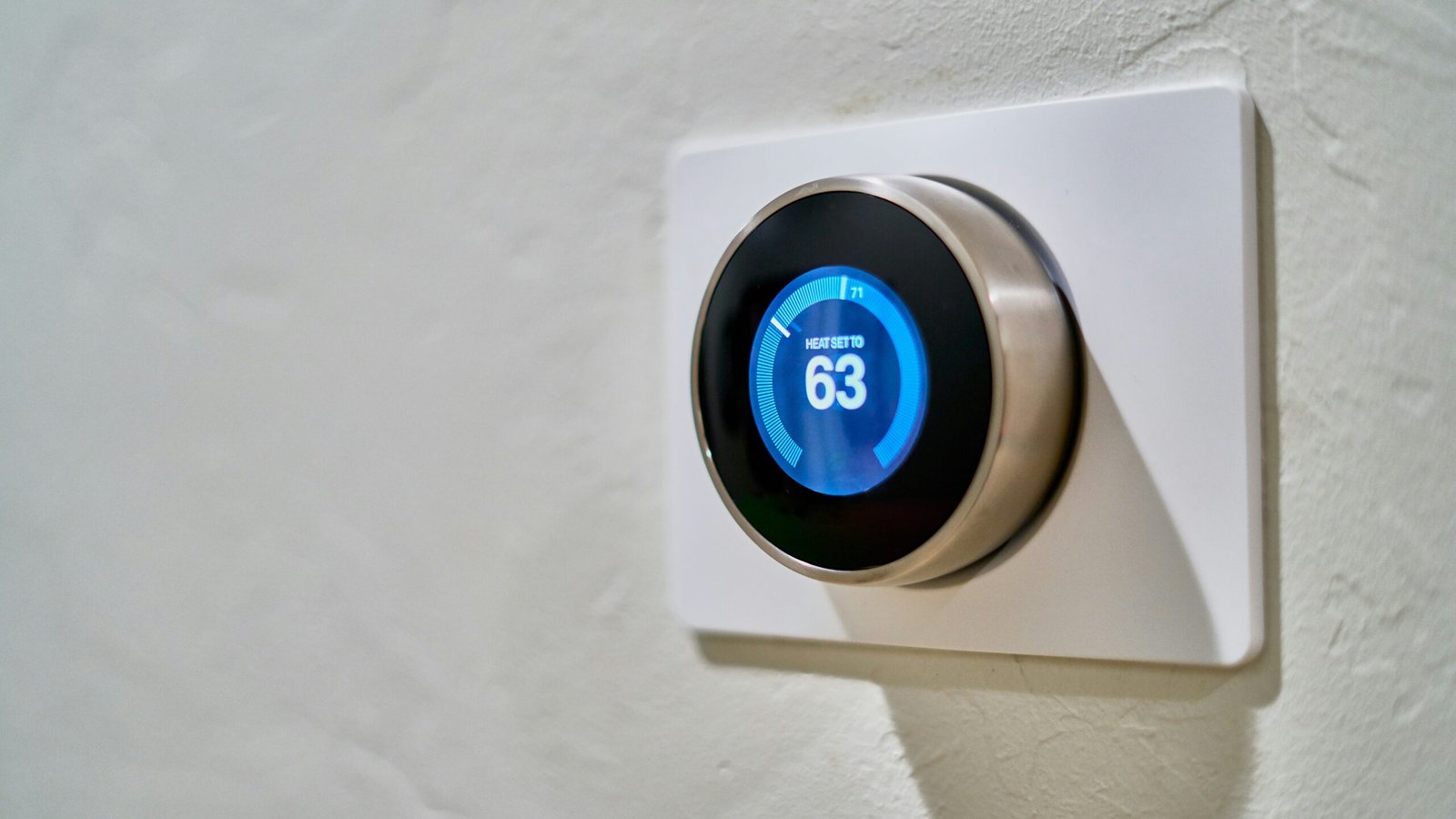
Scope: This article examines temperature and occupancy‑sensor behavior observed in smart thermostats. It focuses on mechanisms, reproducible tendencies, and user‑reported inconsistencies. It does not provide troubleshooting steps, recommendations, or product‑specific guidance. The goal is to document sensor accuracy as an observable, system‑agnostic phenomenon.
Overview
Smart thermostat sensor accuracy depends on how sensors interpret temperature, motion, and environmental cues. Variability in these layers produces recognizable patterns shaped by room layout, airflow, heat sources, and multi‑sensor coordination. These patterns appear across ecosystems and device generations.
Table of Contents
Mechanistic Basis of Smart Thermostat Sensor Accuracy Variability
Several mechanisms shape how thermostats interpret environmental conditions:
- Thermistor placement: Temperature sensors measure the air immediately around the device, which may not reflect the room as a whole.
- Airflow patterns: HVAC vents, drafts, and convection currents influence local readings.
- Heat sources: Electronics, sunlight, and appliances create localized temperature differences.
- Occupancy detection: Motion sensors rely on line‑of‑sight and movement thresholds.
- Multi‑sensor averaging: Systems combine readings from multiple sensors using internal weighting logic.
- Interpretation layers: Controllers apply smoothing, filtering, and prediction models to stabilize readings.
These mechanisms create consistent categories of accuracy patterns.
A Taxonomy of Smart Thermostat Sensor Accuracy Patterns
1. Localized Temperature Bias
Sensors read warmer or cooler than the room average due to placement near vents, windows, or heat sources.
2. Slow Response to Temperature Changes
Sensors update gradually when smoothing algorithms or airflow patterns delay detection of real‑world changes.
3. Room‑to‑Room Variability
Remote sensors show different readings depending on room size, insulation, and airflow.
4. Occupancy Detection Gaps
Motion‑based occupancy sensors may miss stationary occupants or detect movement only within a narrow field.
5. Over‑Sensitive Occupancy Triggers
Sensors may register movement from adjacent rooms, hallways, or pets depending on placement.
6. Multi‑Sensor Weighting Differences
Systems may prioritize certain sensors over others, leading to unexpected temperature or occupancy decisions.
7. Time‑of‑Day Drift
Sunlight, HVAC cycles, and thermal mass create predictable temperature shifts throughout the day.
Sensor Drift Curve
Accuracy variability often follows a recognizable progression:
- Minor reading differences
- Localized temperature bias
- Room‑to‑room divergence
- Occupancy detection inconsistencies
- Persistent drift in specific rooms or times of day
This curve reflects how environmental and interpretive factors accumulate over time.
Environmental and Architectural Effects
Sensor behavior varies across environments:
- Open‑concept spaces: slower temperature stabilization
- Small rooms: faster temperature swings
- Rooms with direct sunlight: predictable warm‑side bias
- Rooms with electronics: localized heat pockets
- Multi‑story homes: vertical temperature stratification
These differences reflect airflow, insulation, and thermal dynamics.
Multi‑Sensor and Multi‑Room Dynamics
Smart thermostats may show:
- different readings across remote sensors
- inconsistent occupancy detection in low‑movement rooms
- temperature averaging that favors certain locations
- delayed updates when sensors use smoothing algorithms
- variability when switching between active sensors
These patterns reflect the interaction between sensor hardware and interpretation logic.
Patterns in User‑Reported Behavior
Users commonly describe:
- thermostats reading warmer or cooler than expected
- remote sensors disagreeing with each other
- occupancy detection missing stationary people
- sensors reacting slowly to temperature changes
- predictable warm or cool spots in specific rooms
- time‑of‑day temperature drift
- inconsistent behavior when multiple sensors are active
These patterns appear across ecosystems and device generations.
Why This Matters
Sensor accuracy patterns shape how smart thermostats behave in daily use. Understanding these patterns provides context for how temperature and occupancy systems operate in real‑world environments without implying malfunction, fault, or user error.
Frequently Observed Questions
Why do thermostat readings differ from room temperature?
Sensors measure localized air, which may not reflect the room average.
Why do remote sensors disagree?
Rooms differ in airflow, insulation, and heat sources.
Why does occupancy detection miss people?
Motion sensors rely on movement and line‑of‑sight.
Why does temperature drift throughout the day?
Sunlight, HVAC cycles, and thermal mass influence readings.
Sources of Observations
Patterns described in this article reflect user‑reported behavior across public forums, reproducible tendencies observed in smart home environments, and known characteristics of temperature and occupancy sensors.
For related patterns involving voice recognition variability, see Voice Assistant Misinterpretation.
For connectivity‑related behavior in lighting systems, see Smart Bulb Connectivity Issues.
For an overview of smart home behavior across devices, see Smart Home Category Hub.