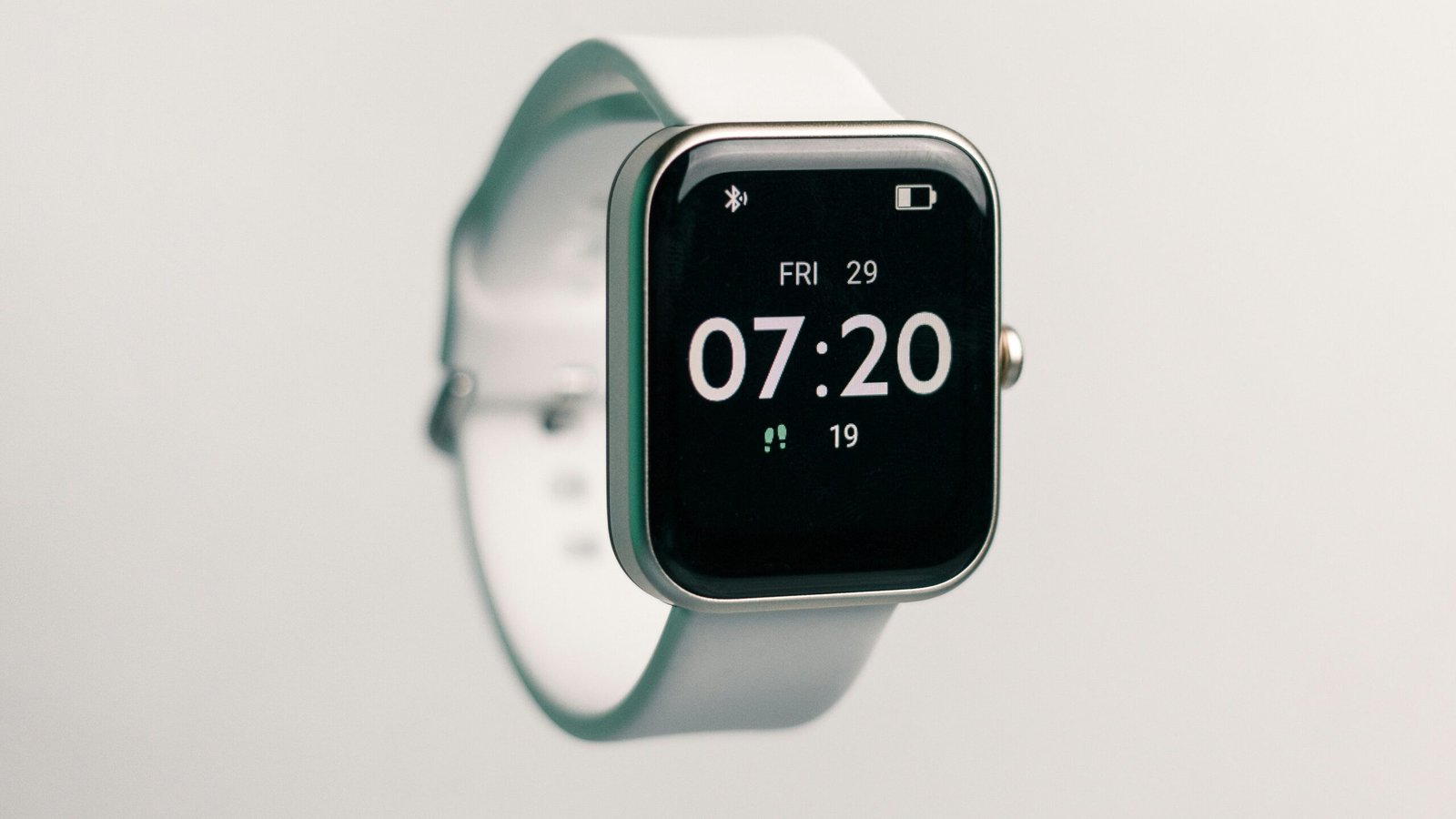
Photo by pratik prasad on Unsplash Introduction Smartwatches are widely used to track steps, heart rate, sleep, calories, GPS, and battery performance. Users often notice variability across devices or even on the same device over time. Understanding smartwatch accuracy trends requires recognizing that consumer wearables prioritize convenience, wearability, and battery efficiency over clinical precision.
Variations in measurements arise from sensor physics, algorithmic interpretation, environmental factors, and device design , not necessarily user error or malfunction. This hub synthesizes evidence to identify long-term trend consistency patterns across metrics, helping readers interpret smartwatch data with clarity.
1. Sleep Tracking Trends Metric Typical Trend Accuracy Structural Limitation Key Observation Total Sleep Time Multi-night consistency Actigraphy + optical HR proxies Overestimation possible in fragmented sleep Sleep Stages Low per-night reliability Inferred from movement/HR Trends more meaningful than single-night data
2. Battery Life Trends Device User-Reported Battery Life Display / Chipset Notes Garmin Enduro 3 (Solar) 30–65+ days MIP + Solar / Custom Multi-week endurance, solar slows drain Coros Vertix 2 30–60 days MIP / Custom Multi-week endurance, GPS efficiency Amazfit T-Rex Ultra 10–20 days AMOLED / Zepp OS Multi-day with standby optimization Huawei Watch GT 4 7–14 days AMOLED / HarmonyOS Balanced endurance and features Apple Watch Ultra 2/3 36–72 hours OLED / S9/S10 Multi-day moderate use, daily charging typical
3. Step Count Accuracy Cause of Inaccuracy Observed Trend Structural Limitation Notes Limited arm movement Undercounting Accelerometer + wrist position Pushing carts, carrying items Slow gait or irregular movement Undercounting Algorithmic classification Variability across individuals Repetitive non-walking motion Overcounting Sensor interpretation Laundry, cooking, driving Strap fit Inconsistent readings Sensor contact Tighter strap improves repeatability
4. GPS Accuracy Trends Environmental Factor Effect on GPS Device Observations Notes Urban canyon Zig-zag drift Apple Watch S7, Garmin F945 Reflection causes positional error Forest canopy Moderate drift Garmin F255, Coros Apex Pro Signal blockage reduces accuracy Coastal cliffs / tunnels Abrupt jumps All tested models Satellite visibility limited Firmware / GPS mode Variable Garmin Fenix series Dual-band GNSS reduces error
Absolute accuracy differs from differential GPS; trend reliability is higher than single-session precision.Article: GPS Accuracy — User Reports
5. Calories Burned Accuracy Factor Observed Effect Structural Limitation Notes Heart rate variability Under/overestimation Optical PPG sensor limits High-intensity activity less precise Activity misclassification Systematic error Algorithmic model assumptions Non-cyclical exercises impacted Incorrect personal profile Bias Population-based EE models Height, weight, age, sex affect estimation Sensor placement / strap Inconsistent readings Optical HR contact Improper skin contact reduces reliability
6. Heart Rate Accuracy Trends Condition Observed Accuracy Structural Limitation Notes Resting / moderate intensity Generally consistent Wrist PPG sensor Reliable for trend tracking High intensity / irregular motion Reduced accuracy Motion artifacts + PPG physics Systematic deviation possible Strap fit Influences readings Sensor contact Tight strap improves stability
Article: Heart Rate Accuracy — User Reports
7. Cross-Metric Patterns and Trade-Offs
Sensor placement affects multiple metrics (steps, HR, calories).Firmware updates may improve trend stability but cannot eliminate structural limits.Battery, GPS, and sensor sampling trade-offs are inherent; higher-resolution measurement reduces battery life.Trend-focused interpretation is more reliable than single-event measurements.
8. Limitations & Exclusion Logic
Only devices with sufficient user reports and scientific validation are included.
Metrics are trend-focused , not clinical diagnostics.
Devices with low review volume or insufficient data are excluded to maintain reliability.
9. Conclusion Consumer smartwatches are approximate measurement tools by design . Across steps, sleep, heart rate, calories, GPS, and battery:
Consistency over time matters more than single measurement precision. Structural limitations in sensors, algorithms, and environmental factors explain observed deviations.
Understanding long-term trends provides clarity for interpreting wearable data without misattributing user error or expecting perfect accuracy.
This hub consolidates research into a neutral, synthesis-focused resource for interpreting smartwatch accuracy trends in 2026.