
Scope: This article summarizes aggregated user reports, manufacturer documentation, and published comparative testing. It is not intended to provide medical, diagnostic, or professional guidance, and individual results may vary.
Introduction
Smartwatch heart rate accuracy issues are among the most commonly reported problems across wrist-based fitness wearables.
Based on aggregated customer feedback, manufacturer documentation, support‑forum discussions, and published lab comparisons using chest‑strap reference devices, this guide summarizes the most frequently reported causes and fixes associated with smartwatch heart rate not accurate measurements across Apple, Samsung, and Garmin models.
Table of Contents
Section 1 — Common Causes
Improper Sensor Contact
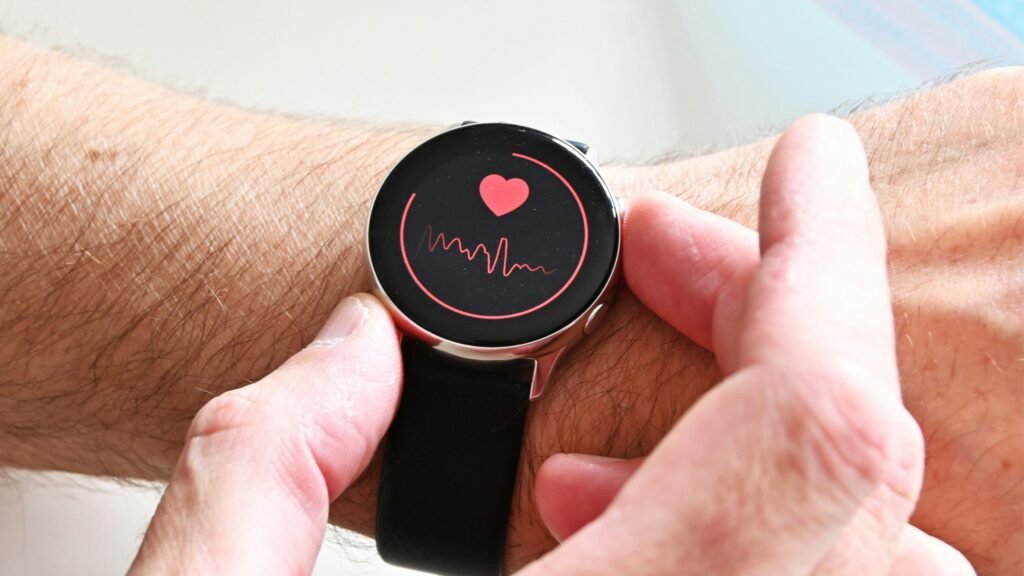
Users commonly report inaccurate readings when the watch does not maintain consistent contact with the skin. This is one of the most frequent reasons people experience smartwatch heart rate not accurate measurements during exercise.
Loose or Incorrect Fit
Support forums frequently mention that a loose band or wearing the device too low on the wrist can interfere with optical sensors.
Skin Conditions or Obstructions
Manufacturers note that tattoos, excessive hair, sweat buildup, or lotion residue may affect optical performance.
High‑Intensity or Irregular Movement
Users often report that rapid arm motion disrupts optical signal tracking during workouts.
Sensor Calibration or Software Limitations
Some users notice changes in accuracy after firmware updates or when sensors have not recalibrated to recent usage patterns.
Section 2 — Common Fixes
Adjusting Watch Placement
Many users report improved consistency when wearing the watch slightly higher on the wrist.
Securing a Snug Fit
Support documentation suggests ensuring the band is snug without restricting circulation. A secure fit is frequently mentioned as a key factor when troubleshooting smartwatch heart rate not accurate issues.
Cleaning the Sensor Area
A commonly reported fix is cleaning the back of the watch to remove sweat, oil, or debris.
Switching Activity Modes
Manufacturers often recommend selecting the appropriate workout mode for more consistent tracking.
Allowing Calibration Over Time
Accuracy may improve after several workouts as the device adapts to movement patterns.
Updating Firmware
Support forums frequently mention that installing the latest firmware resolves known inconsistencies.
Section 3 — When the Issue May Be Hardware‑Related
If the issue continues after common adjustments, users often report that the cause may be hardware‑related. Examples include:
- aging optical sensors
- internal component wear
- physical damage
- design limitations in earlier generations
These factors are frequently mentioned when users describe a smartwatch heart rate not accurate problem that does not improve over time.
Manufacturers typically recommend professional service or considering an upgrade when these factors are involved.
Section 4 — Smartwatch Models Frequently Evaluated in Lab Comparisons
Disclosure: This article may include affiliate links; however, product references are included for technical context and research alignment, not as purchase recommendations.
Smartwatch Heart‑Rate Accuracy (Lab‑Based Comparisons)
Controlled evaluations of wrist‑based optical heart‑rate sensors typically compare smartwatch readings against a chest‑strap ECG reference such as the Polar H10.
Peer‑reviewed studies consistently show that wrist sensors perform well during rest and steady‑state exercise but demonstrate greater variability during high‑motion and high‑intensity activity.
Independent device-specific tests using Polar H10 references frequently report that premium multi-sport watches and newer flagship models show more consistent wrist-based measurements in controlled comparisons, although chest-strap ECG remains the gold standard for capturing rapid heart-rate changes and interval training.
Lab‑Based Accuracy Chart (Top Models)
| Device | Relative HR Accuracy (vs Chest-Strap ECG) | Controlled Testing Findings |
|---|---|---|
| Apple Watch Ultra 2 | Very High Accuracy | Independent structured comparisons using a Polar H10 reference show the Ultra 2 closely aligns with chest‑strap ECG across steady running, outdoor workouts, and mixed‑intensity sessions, with minimal deviation reported. |
| Samsung Galaxy Watch 7 | Moderate Accuracy | Testing against a Polar H10 reference indicates improved accuracy over earlier Samsung models, with small deviations during steady‑state exercise and more noticeable variability during high‑motion or rapid‑intensity transitions. |
A. Comparison Table
| Model | Controlled Test Strength | Limitations Identified in Evidence |
|---|---|---|
| Apple Watch Ultra 2 | Closest alignment to chest‑strap ECG across steady and interval activities | Like all wrist sensors, may smooth or lag rapid HR transitions |
| Samsung Galaxy Watch 7 | Measurable improvements and moderate agreement during steady‑state exercise | Larger error range during high‑intensity or motion‑heavy segments |
B. Additional Lab-Evaluated Smartwatch (Evidence)
Garmin Forerunner 965
Peer‑reviewed studies focused exclusively on the Forerunner 965 are limited, but its optical sensor builds on Garmin’s multi‑sport platforms evaluated against chest‑strap ECG references in published research.
Independent structured field tests comparing interval and HIIT sessions against Polar H10 chest straps report:
- low average error
- acceptable tracking during rapid heart‑rate changes
This positions the Forerunner 965 as a strong performance‑oriented option with documented real‑world accuracy.
C. Highlighted Alternatives (Top 3)
Strongest agreement with chest‑strap ECG in independent structured comparisons.
Measurable accuracy improvements over previous Samsung models, with moderate deviation during high‑motion activity.
Independent HIIT and interval comparisons using a Polar H10 reference show low error rates and stable tracking.
Lab Testing Reference (Scientific Study)
- Gillinov et al. Variable Accuracy of Wearable Heart Rate Monitors During Aerobic Exercise https://pubmed.ncbi.nlm.nih.gov/28709155/
Controlled Testing Evidence (Independent, Non‑Scientific)
- Apple Watch Ultra 2 vs Polar H10 — Independent Data Scientist Comparison https://www.techradar.com/health-fitness/a-data-scientist-found-the-apple-watch-ultra-2-is-more-accurate-than-garmin-samsung-and-even-whoop
- HIIT Wrist vs Chest Strap Comparison (Consumer‑Level) https://www.alibaba.com/product-insights/smartwatch-heart-rate-accuracy-during-hiit-are-chest-straps-still-worth-the-sweat-or-is-wrist-tech-finally-reliable.html
FAQ — Smartwatch Heart Rate Not Accurate
Why is my smartwatch heart rate not accurate during workouts?
Optical sensors often struggle during high-motion activity, rapid arm movement, or exercises involving wrist flexion. Sweat, loose fit, and inconsistent skin contact are frequently reported causes.
How can I improve the accuracy of my smartwatch heart rate sensor?
Users commonly report better results by:
- wearing the watch slightly higher on the wrist
- ensuring a snug fit
- cleaning the sensor area
- selecting the correct workout mode
Do tattoos or skin tone affect smartwatch heart rate accuracy?
Manufacturers note that tattoos, darker ink, heavy hair, or lotion residue may interfere with optical light sensors.
Why does my smartwatch show different heart rate numbers than a chest strap?
Chest straps measure electrical signals, while wrist sensors use optical light. Controlled tests consistently show chest straps remain more accurate during high‑intensity activity.
Can software updates affect heart rate accuracy?
Yes. Users sometimes report changes after firmware updates. Allowing recalibration over several workouts may improve consistency.
When should I suspect a hardware issue?
If accuracy does not improve after common adjustments, users often attribute the issue to aging optical sensors or internal wear.
Section 5 — Conclusion
Smartwatch heart‑rate inaccuracy is a common issue across wrist‑based fitness wearables. The problem is most often linked to factors such as sensor placement, fit, movement patterns, or temporary signal interference.
When commonly reported adjustments do not improve consistency, users frequently attribute ongoing inaccuracies to hardware limitations, aging optical components, or design constraints present in certain models. As a result, some users choose devices that are consistently reported to align more closely with chest-strap reference data in controlled comparisons.