
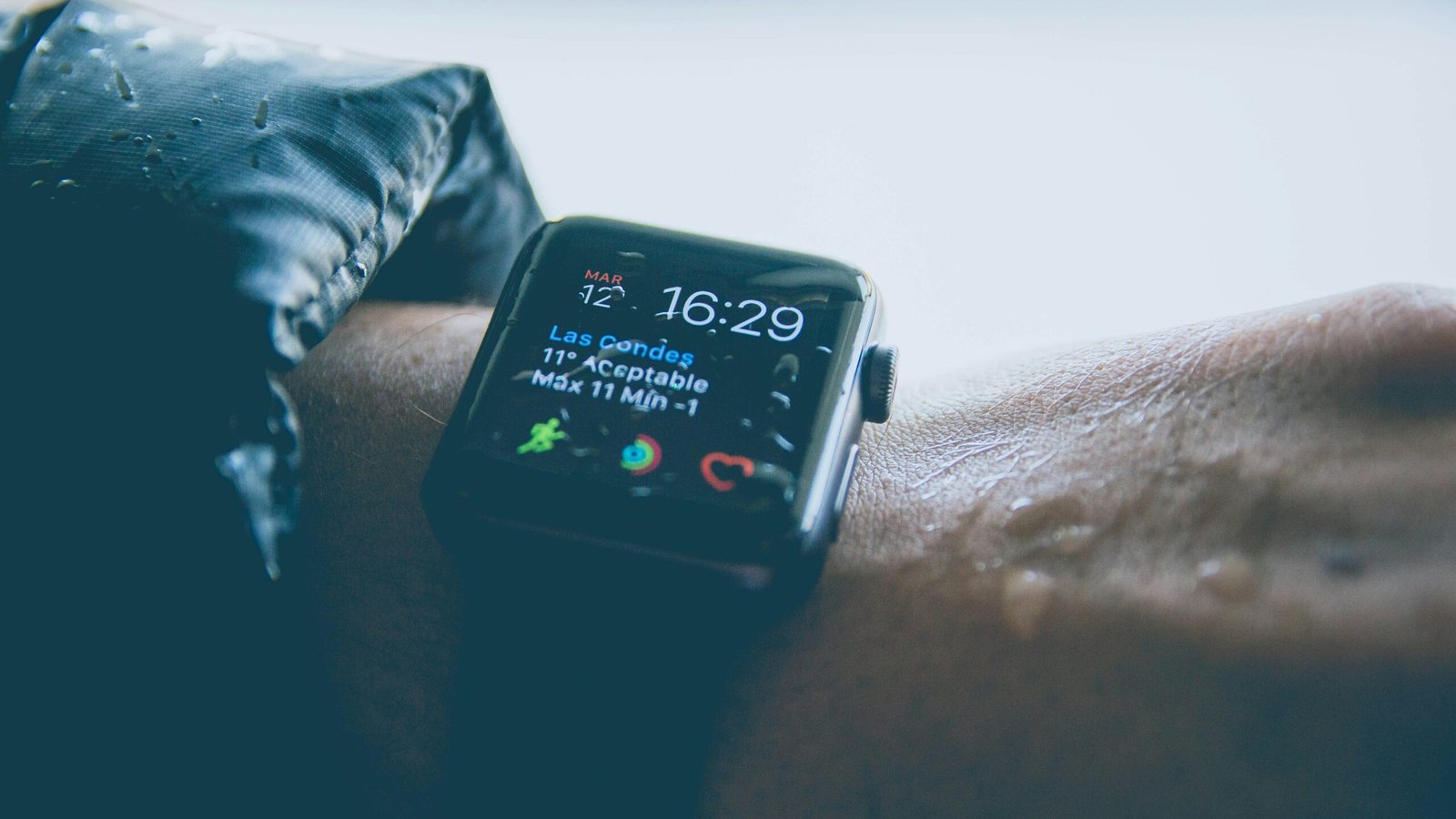
Scope note: This article synthesizes publicly available information and aggregated user‑reported experiences across six measurement domains: heart‑rate monitoring, sleep tracking, step counting, activity tracking, battery behavior, and recovery metrics. It does not provide device‑specific recommendations, optimization strategies, or professional guidance. Individual results may vary.
Introduction
Wearable measurement variability is consistently reported across fitness wearables, appearing across different sensors, activities, environments, and time scales. While each measurement domain has its own mechanisms and constraints, the underlying patterns often converge. This synthesis integrates observations from six foundational areas:
- Heart‑rate monitor inconsistencies
- Sleep tracking errors
- Step count discrepancies
- Activity tracking under different conditions
- Fitness tracker battery trends
- Recovery metrics inaccuracies
The goal is to identify cross‑domain patterns, shared structural limitations, and recurring behaviors that appear regardless of device type or model.
Table of Contents
Section 1 — Cross‑Domain Patterns Observed Across All Six Categories
1. Sensor Behavior Changes Under Motion
Across heart‑rate monitoring, step counting, activity tracking, and recovery metrics, users frequently report that motion introduces variability. Optical sensors, accelerometers, and classification models all behave differently when movement is irregular, low‑amplitude, or high‑vibration.
2. Environmental Conditions Influence Multiple Measurements
Temperature, humidity, bedding, terrain, and indoor vs. outdoor environments appear repeatedly as sources of variability. These conditions affect HR sampling, sleep staging, GNSS accuracy, stride‑length modeling, and battery performance.
3. Model‑Based Interpretation Introduces Variability
Sleep staging, calorie estimation, distance modeling, and recovery scoring rely on algorithms that combine multiple inputs. Users often observe that small changes in one input (e.g., resting HR) can shift the final output.
4. Long‑Term Drift and Aging Effects
Battery capacity decline, sensor calibration drift, and strap‑fit changes appear across multiple categories. These long‑term effects influence HR accuracy, recovery metrics, and activity detection.
5. Differences Between Rhythmic and Non‑Rhythmic Movement
Walking and running produce more consistent patterns across HR, steps, distance, and activity recognition. Non‑rhythmic activities—strength training, household tasks, mixed‑movement sports—show greater variability.
These cross‑domain observations illustrate how wearable measurement variability emerges from motion, environment, model‑based interpretation, and long‑term sensor behavior.
Section 2 — Comparison Matrix: How Each Domain Behaves Under Key Conditions
Below is a structural comparison of how each measurement domain responds to common conditions. (No claims, no rankings, no performance judgments.)
| Condition / Domain | HR Monitoring | Sleep Tracking | Step Counting | Activity Tracking | Battery Behavior | Recovery Metrics |
|---|---|---|---|---|---|---|
| Motion | High influence | Moderate influence | High influence | High influence | Low influence | Moderate influence |
| Environmental Factors | Moderate | High | Moderate | High | High | High |
| Model‑Based Interpretation | Low–Moderate | High | Low | Moderate | Low | High |
| Long‑Term Aging | Moderate | Low | Low | Low | High | Moderate |
| Rhythmic vs. Non‑Rhythmic Movement | High difference | Low | High difference | High difference | None | Low |
This matrix highlights structural tendencies, not performance outcomes.
Section 3 — Shared Mechanisms Behind Wearable Variability
Across sensor types, wearable measurement variability reflects the interaction between optical sensing, accelerometer‑based inference, GNSS availability, and multi‑input modeling.
1. Optical Sensing Constraints
Heart‑rate monitoring and recovery metrics rely heavily on optical sensors. Users frequently report variability due to:
- Motion artifacts
- Strap‑fit differences
- Skin temperature
- Sleep position
- Environmental light
These factors influence both instantaneous HR readings and downstream metrics such as HRV and recovery scores.
2. Accelerometer‑Based Inference
Step counting, activity recognition, and some sleep‑tracking components rely on accelerometer patterns. Variability arises when:
- Movement is irregular
- Arm swing is reduced
- Vibration resembles step‑like motion
- Indoor movement lacks GNSS support
These patterns appear consistently across multiple categories.
3. GNSS and Stride‑Length Modeling
Distance and activity tracking show differences between indoor and outdoor conditions. Users often observe:
- More variability indoors
- More consistency outdoors when GNSS is available
- Differences in stride‑length assumptions across activities
These mechanisms influence both activity tracking and downstream calorie estimates.
4. Multi‑Input Recovery Models
Recovery metrics combine HRV, resting HR, sleep staging, and activity load. Variability in any input propagates into the final score. This creates cross‑domain interactions:
- Sleep staging affects recovery
- HR sampling affects recovery
- Activity load affects recovery
- Environmental factors affect all three
This makes recovery metrics the most integrative—and therefore the most variable—domain.
5. Battery Behavior as a Cross‑Domain Modifier
Battery performance influences:
- Sensor sampling frequency
- GNSS usage
- Display behavior
- Overnight HRV sampling windows
Users often report that battery decline changes how sensors behave over time.
Section 4 — Domain‑Specific Patterns That Interact With Others
Heart‑Rate Monitoring → Recovery Metrics
Variability in HR and HRV directly influences recovery classifications.
Sleep Tracking → Recovery Metrics
Sleep duration, staging, and motion influence recovery scores.
Activity Tracking → Calorie Estimates
Movement type, rhythm, and GNSS availability influence calorie modeling.
Step Counting → Activity Recognition
Step patterns influence automatic activity detection.
Battery Trends → Sensor Behavior
Battery decline influences sampling frequency and sensor availability.
These interactions create the layered variability users often describe.
Section 5 — Why Variability Persists Across Devices
Across all six categories, user reports and technical explanations point to structural constraints:
- Sensors detect proxies, not direct physiological or biomechanical events
- Models interpret data using assumptions that may not hold across all conditions
- Environmental factors influence multiple sensors simultaneously
- Motion introduces noise into optical and accelerometer signals
- Battery aging affects sampling and sensor availability
- Multi‑input metrics amplify variability from upstream measurements
These constraints appear consistently across device types, form factors, and generations.
For multi‑input model variability, see Recovery Metrics Inaccuracies — Common Patterns and User‑Reported Behaviors.
For motion‑dependent measurement behavior, see Activity Tracking Under Different Conditions
For long‑term power‑related measurement patterns, see Fitness Tracker Battery Trends
For related patterns in nighttime measurement variability, see Sleep Tracking Errors — Common Causes and Fixes
For additional motion‑related measurement issues, see Step Count Discrepancies — Common Causes and Fixes
For patterns related to heart‑rate measurement variability, see Heart Rate Monitor Inconsistencies — Common Causes and Fixes
Section 6 — FAQ: Cross‑Category Measurement Variability
Why do different measurements vary under the same conditions?
Each measurement relies on different sensors and models, which respond differently to motion, environment, and sampling windows.
Why do some activities produce more consistent results than others?
Rhythmic movement produces clearer patterns for accelerometers and optical sensors.
Why do multi‑input metrics vary more than single measurements?
Variability in any input propagates into the combined output.
Why do measurements change over time?
Battery aging, strap‑fit changes, and sensor drift influence long‑term behavior.
Conclusion
Across heart‑rate monitoring, sleep tracking, step counting, activity tracking, battery behavior, and recovery metrics, users consistently report patterns of variability shaped by motion, environment, sensor design, model‑based interpretation, and long‑term aging. While each domain has unique mechanisms, the underlying behaviors often converge, creating a shared landscape of measurement variability across fitness wearables.
Taken together, these patterns show that wearable measurement variability is shaped by structural constraints that appear consistently across device types and generations.
Sources & Reference Context
(Representative examples; not device‑specific)
- Manufacturer documentation on sensor behavior and modeling
- IEEE literature on optical sensing, accelerometry, GNSS, and HRV sampling
- Long‑running user discussions across wearable communities